← Jiamu Tang · Publications

CHI EA 2025 · Research walkthrough

Dreamory

AI-powered bedtime storytelling for emotional reframing before in-sleep memory consolidation.

Human–Computer Interaction Generative AI Meaning-Making Jiamu Tang · Runyan Tian · Zhuying Li
The central question

Can AI help people reinterpret an experience without taking ownership of the interpretation away from them?

01 · Meaning-making

One difficult event can collide with a broader understanding of life
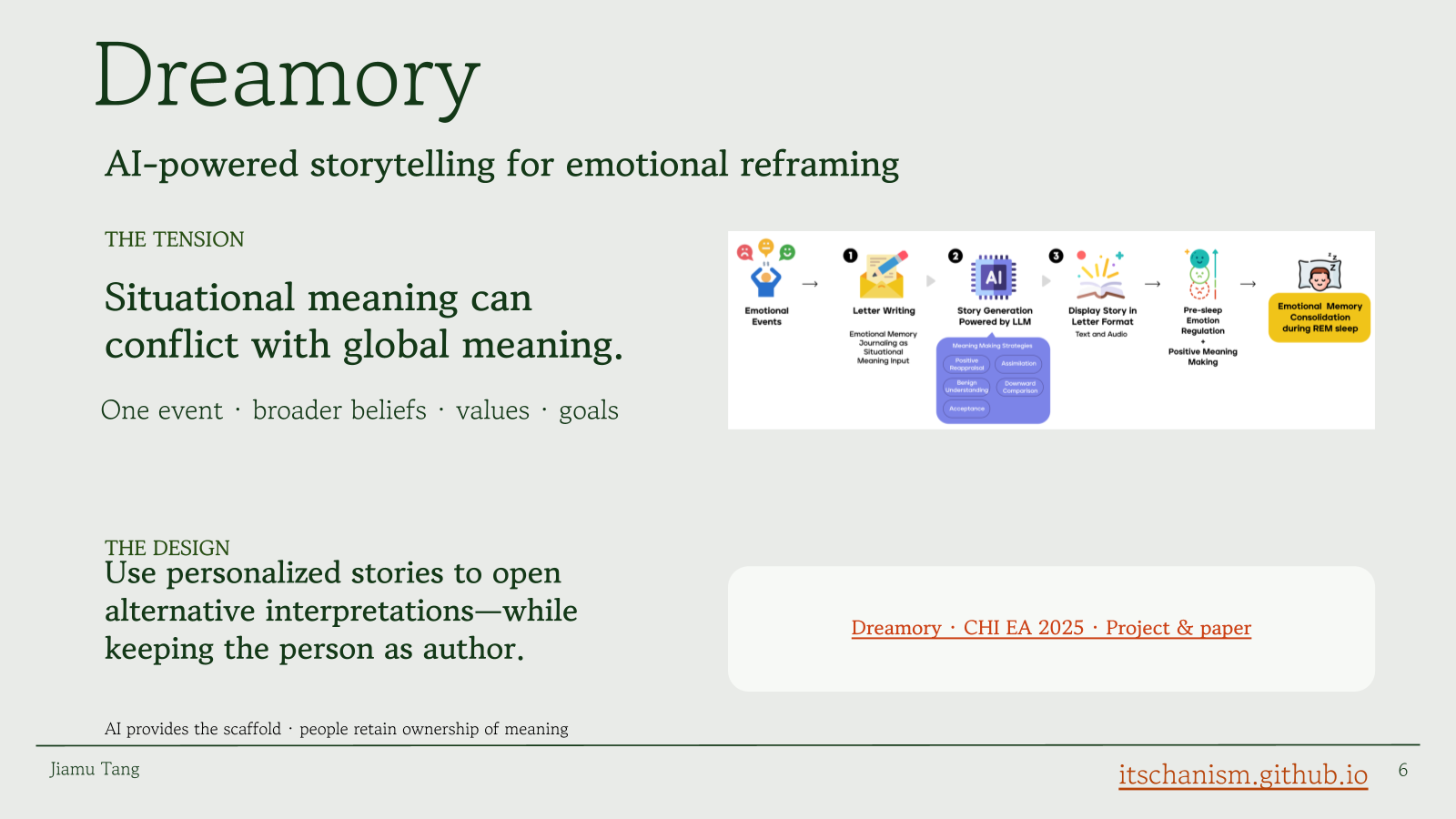
Dreamory slide contrasting situational meaning with global meaning
Reading noteDreamory moves beyond the body into generative AI, but I see it as another form of augmentation. Situational meaning is how I interpret a particular event; global meaning is the broader set of beliefs, values, goals, and assumptions through which I understand my life. An experience can become difficult when those two levels do not fit.
02 · System

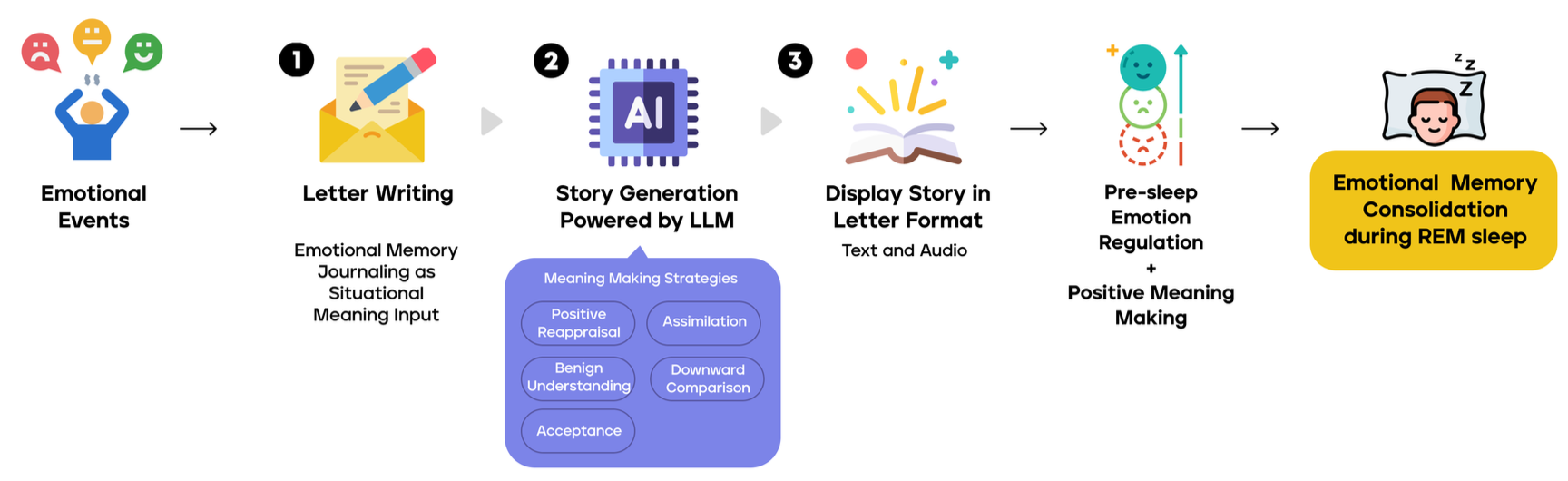
A lived experience becomes material for a personalized reframing narrative

Dreamory process from emotional event and letter writing to AI story generation and pre-sleep meaning-making
Reading noteThe user begins with something that actually happened to them. Dreamory uses that material to construct a personalized story that supports alternative interpretations and positive reframing, then presents it in text and audio before sleep.
03 · Agency

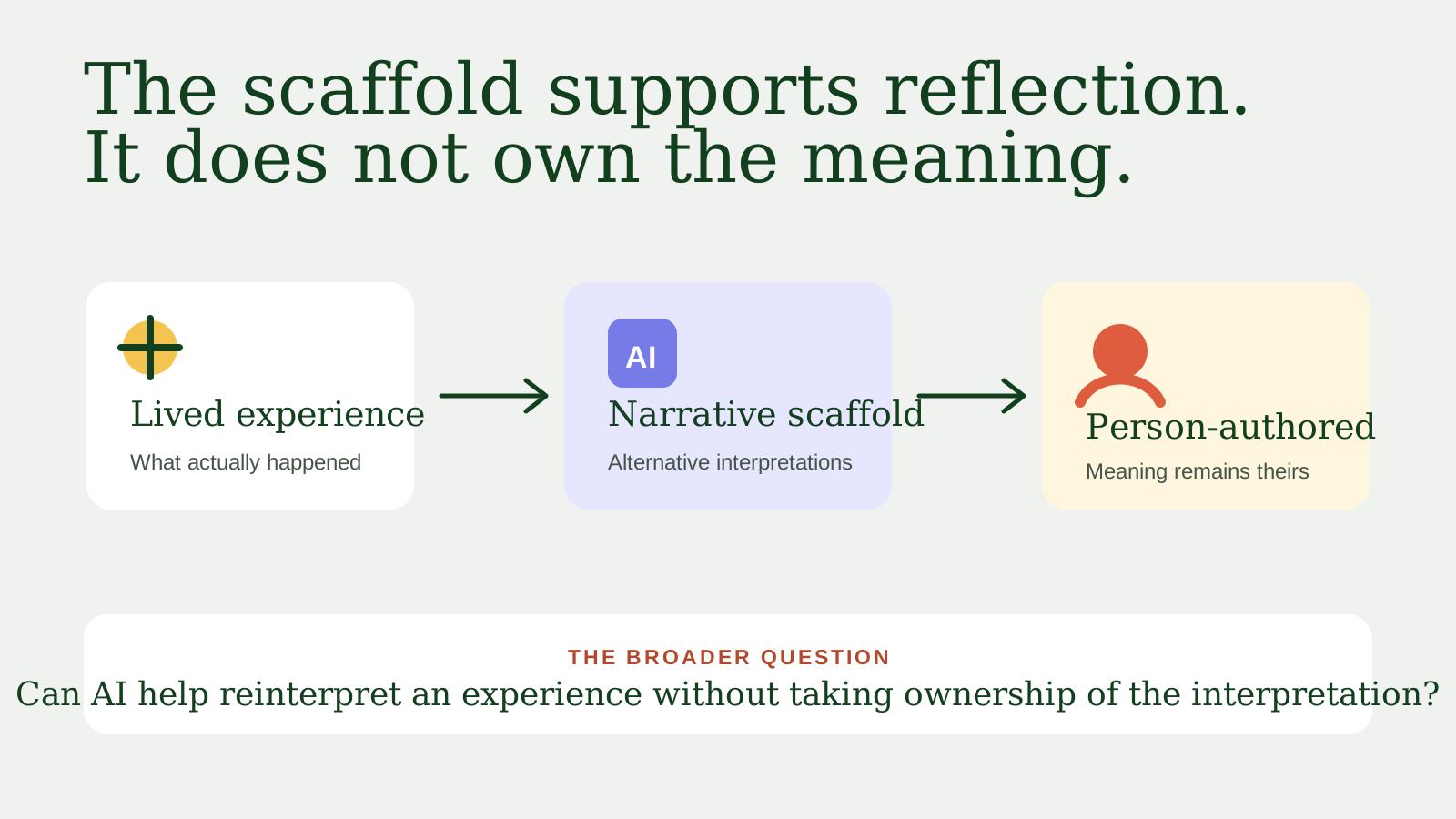
The AI offers a scaffold; the person remains the author

Diagram showing lived experience moving through an AI narrative scaffold to a person-authored interpretation
Reading noteThe AI is not supposed to tell a person what their experience means. It creates a space in which they can revisit situational meaning in relation to their broader meaning system. The central question is whether AI can support reinterpretation without taking ownership of the interpretation away from the person.